

Although no one considers an immediate military conflict between the two largest Asian powers likely, the continuous diplomatic confrontations, military exercises, maritime claims, and the growing involvement of the US create a backdrop that several analysts now characterize as a real "cold war".
This assessment was expressed by the senior researcher of the Center for Japanese Studies of the Institute of China and Contemporary Asia of the Russian Academy of Sciences, Oleg Kazakov, who argued that the confrontation between Tokyo and Beijing does not constitute a temporary crisis, but a long-term conflict with deep historical, ideological, and geopolitical roots.
Historical wounds that never healed
Relations between Japan and China continue to be largely determined by the memory of World War II and the Japanese occupation of a large part of the Chinese territory.
According to Kazakov, Beijing continues to view Japan as a country moving toward military rearmament, constantly utilizing the collective memory of war crimes to strengthen domestic cohesion but also to restrict economic and cultural relations between the two countries.
On the other hand, Tokyo considers that the growing military power of China, combined with Beijing's close relations with North Korea, constitutes a serious threat to its national security.
This is also the main reason why Japan has been accelerating the modernization of its Armed Forces in recent years, gradually abandoning its post-war strategy of an exclusively defensive character.

The dispute over the Senkaku – Diaoydao islands
The most dangerous flashpoint of tension continues to be located in the East China Sea.
The uninhabited Senkaku islands, as Japan calls them, or Diaoydao, as China names them, remain the subject of intense confrontation for decades.
The situation deteriorated anew when Japan dispatched the research vessels Takuyo and Koyo for oceanographic research in the area.
China reacted immediately, demanding the termination of the research, arguing that it is being carried out in a maritime area belonging to its own sovereignty.
Tokyo categorically rejected the Chinese claims.
The Chief Cabinet Secretary of Japan, Minoru Kihara, stated that Japan carried out the research exclusively within its Exclusive Economic Zone and officially protested to Beijing through diplomatic channels.

The military exercises that enraged Beijing and Moscow
The tension is not restricted to diplomatic protests.
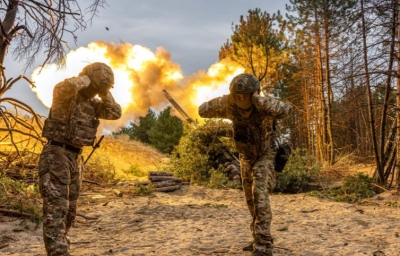
From June 22 to July 1, the large joint military exercise Valiant Shield 26 took place, in which the Armed Forces of Japan and the United States participated.
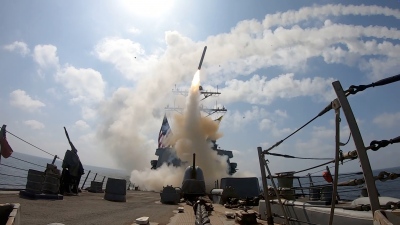
During the exercise, the American Typhon missile system was deployed, while the two staffs executed scenarios for the recapture and defense of disputed islands.
This move provoked intense reactions from both China and Russia.
The spokesperson for the Russian Ministry of Foreign Affairs, Maria Zakharova, characterized the deployment of the system as a threat to regional security, arguing that it further reinforces destabilization in the region.

China responds with its own operations
A few weeks earlier, between June 6 and June 10, the Chinese Coast Guard carried out a special operation in the Pacific Ocean.
This operation was linked to the talks between Japan and the Philippines regarding the delimitation of maritime zones, which also include issues related to Taiwan.
For Beijing, any diplomatic or military cooperation that strengthens the position of Taiwan or restricts Chinese claims is considered highly provocative.
Why a military conflict is not expected
Despite the growing tension, Kazakov considers that the transition from a "cold" to a "hot" war remains unlikely.
The main reason is that China constitutes a nuclear power, while even Japan, despite its impressive rearmament, does not desire a generalized military conflict that could lead to an uncontrollable regional crisis.
Instead, the two sides appear to choose the strategy of continuous pressure through military exercises, diplomatic protests, economic measures, and operations displaying power.

The Donald Trump factor changes the balances
Kazakov attributes part of the change in Japan's stance also to the changing policy of the United States.
According to him, during the presidency of Donald Trump, doubts were created in Tokyo regarding whether Washington remains an absolutely reliable guarantor of the security of its allies.
This uncertainty pushed Japan to accelerate its military modernization and to invest in new deterrence capabilities.
Fukushima remains an open wound
Another point of intense confrontation constitutes the decision of Japan to discharge treated water from the Fukushima-1 nuclear power plant into the Pacific.
China continues to exercise intense criticism, arguing that the decision poses environmental risks, while it also uses the issue as a tool for exercising political pressure toward Tokyo.
Could Russia become involved?
Kazakov estimates that the continuous escalation between Japan and China creates serious risks for Russia as well.
Moscow maintains a strategic partnership with China, however, it simultaneously seeks not to fully rupture its relations with Japan.
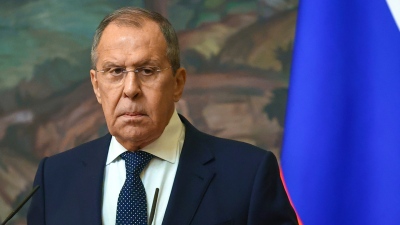
Despite current tensions, the Russian Minister of Foreign Affairs, Sergey Lavrov, stated on July 2 that there still exist strong political and social forces in Japan that desire a constructive dialogue with Russia.
He made particular reference to the Hokkaido region, where, as he claimed, a positive stance toward the historical relations of the two countries continues to exist.

The new geopolitical reality in Asia
The developments of recent weeks show that the confrontation between Japan and China no longer constitutes a simple bilateral dispute.
The United States, Russia, the Philippines, Taiwan, and the overall security architecture of the Asia-Pacific region are now involved in the equation.
Although no one predicts an immediate military conflict, the continuous competition, military exercises, overlapping territorial claims, and the increasing militarization of the region create an environment where even a isolated incident could cause a dangerous chain reaction.
The "cold war" between Japan and China now appears to constitute one of the most important geopolitical challenges of the 21st century, with repercussions that extend far beyond the borders of East Asia.
www.bankingnews.gr




Σχόλια αναγνωστών